
Vernon County Parole and Probation
Missouri uses several forms of community supervision. Parole begins when the Missouri Parole Board permits a person to leave state prison before the full sentence has reached final discharge. Conditional release is also a supervised phase after prison. Probation comes from a court. It may follow a suspended sentence or another court disposition without any state-prison stay. For that reason, a Vernon County probation record does not prove that the person was once incarcerated in a Missouri prison.
The Missouri Department of Corrections Division of Probation and Parole manages all three forms. The legal source and timing differ, but each active case has an assigned field office and terms that the person must follow. A jail release on bond is different. It leaves the criminal case pending and does not create MODOC supervision unless a separate court or Board action applies.
Standard and special conditions can be confirmed as public items through the supervising office. A court may impose special probation terms, while the Board sets parole or conditional-release terms. A reported violation can prompt an officer response, court action, Board review, or custody, but the report alone should not be turned into a claim about the final outcome. Check the actual order and current office status. For a local custody event, the Vernon County Jail remains the source for the physical release or transfer record.
| Status | Who orders it | What it establishes |
|---|---|---|
| Parole | Missouri Parole Board | State-prison release into community supervision |
| Conditional release | Statute and Parole Board administration | A supervised part of a state sentence after confinement |
| Probation | Sentencing court | Court supervision that may occur without prison |
| Final discharge | Board or sentencing court, as applicable | The supervision term has legally ended |
- Parole
- Community supervision after release from state prison by Board order.
- Probation
- Court-ordered supervision that may replace or follow confinement.
- Conditional release
- The supervised final portion of an eligible prison sentence.
- Discharge
- The formal end of the sentence or supervision term.
Verify Vernon County Post-Release Supervision
The MODOC Offender Web Search is the first public check for active supervision. It includes active probationers and parolees, uses first and last names including aliases, and requires a CAPTCHA before the search form opens. It specifically excludes discharged offenders. Thus, a result assigned to a probation and parole district can support active community status, but a missing result cannot establish that the person is confined or has never been supervised.
Use the full legal name, DOC number if known, birth date, and Vernon County cause information to prevent a same-name error. The assigned location matters. A correctional center points to state confinement. A probation and parole district points to field supervision, though the district should confirm a recent change. MODOC states that specific status questions belong with the institutional caseworker or field officer.
- Search the exact name and known aliases. Use the permanent DOC number when available.
- Match the person through the county, offense, cause, and other non-sensitive facts.
- Read the assigned location and active sentence entries. Do not treat probation as proof of a prison release.
- Call the assigned field office to confirm the supervision type, officer or office, public release date, and whether supervision remains active.
- If the active search has no result, check the court judgment and seek the MODOC release or final-discharge record.
The full custody path can also be checked through the Vernon County released-inmate search when the last custodian is uncertain. County jail, state prison, and federal custody use different records.
Note: An assigned field office supports active supervision, but only the responsible office can confirm a current change or final discharge.
Local Vernon County Supervision Office
Vernon County has a direct local route. The current MODOC office listing identifies District 5 in Nevada, and the official District 5 profile expressly includes Vernon among the seven counties served. The office is in the Southwest Region. Its caseload includes felony and misdemeanor probation, Board cases, interstate matters, lifetime supervision, and other specialized supervision needs.
The official District 5 address listing can be checked before an in-person visit:
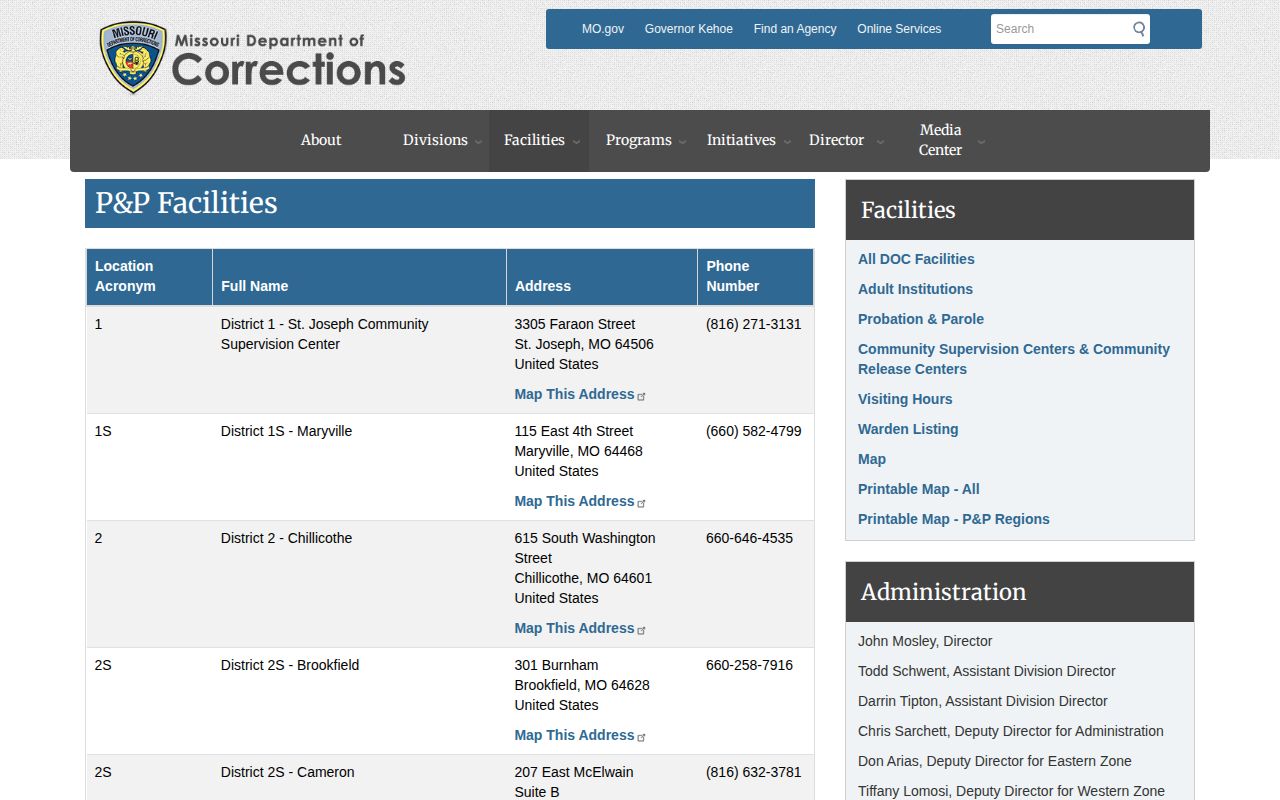
The listing makes Nevada the practical first contact for Vernon County parole and probation confirmation instead of routing every question to a central state unit.
Missouri Division of Probation and Parole, District 5330 South Prewitt Ln.
Nevada, MO 64772
Phone: (417) 448-1250
Hours: 8:00 a.m. to 5:00 p.m., Monday through Friday, except state holidays
When calling, ask a narrow public-status question. The office can confirm whether the person is under supervision, the supervising officer and office, parole or conditional-release date, and other open status items. Treatment, health, and protected case-plan details are not part of a proper public request.
Vernon County Supervision Record Channels
Several channels cover different parts of a Vernon County supervision record. General offender-search help goes through MODOC Constituent Services at constituentservices@doc.mo.gov. Probation and parole inquiries may be sent to probation.parole@doc.mo.gov. The department asks for a correctly spelled name, inmate number when available, date of birth, and a clear question. Sensitive identifiers should be shared only through an official method the requester trusts.
A formal request uses the MODOC Sunshine Law channel. The Office of Director custodian is OD.SunshineRequest@doc.mo.gov, while Parole Board records go to ParoleBoard.SunshineRequest@doc.mo.gov. Ask for existing items tied to the identified person and cause: admission and physical-release dates, release type, parole or conditional-release date, assigned field office, sentence calculation, Board decision, and final-discharge date or order. MODOC publishes no universal fee or completion time for this request, so seek an estimate instead of assuming one.
The court record remains a separate source. Case.net can show the Vernon County judgment, probation order, revocation, or later discharge entry. It does not prove the instant the jail or prison completed a physical release. Reconcile the court docket with the corrections record when several causes or amended orders exist.
Vernon County Parole Board Records
The Missouri Parole Board orders parole and sets its conditions. A hearing is not a release. The Board may set a future release date, schedule later review, continue the matter, retain an earlier date, or later change a decision. Missouri’s public-information guidance identifies the Board release decision as open information, yet no official searchable public results database was found.
The official Parole Board source shows the contact and rules path used for a Vernon County parole inquiry:
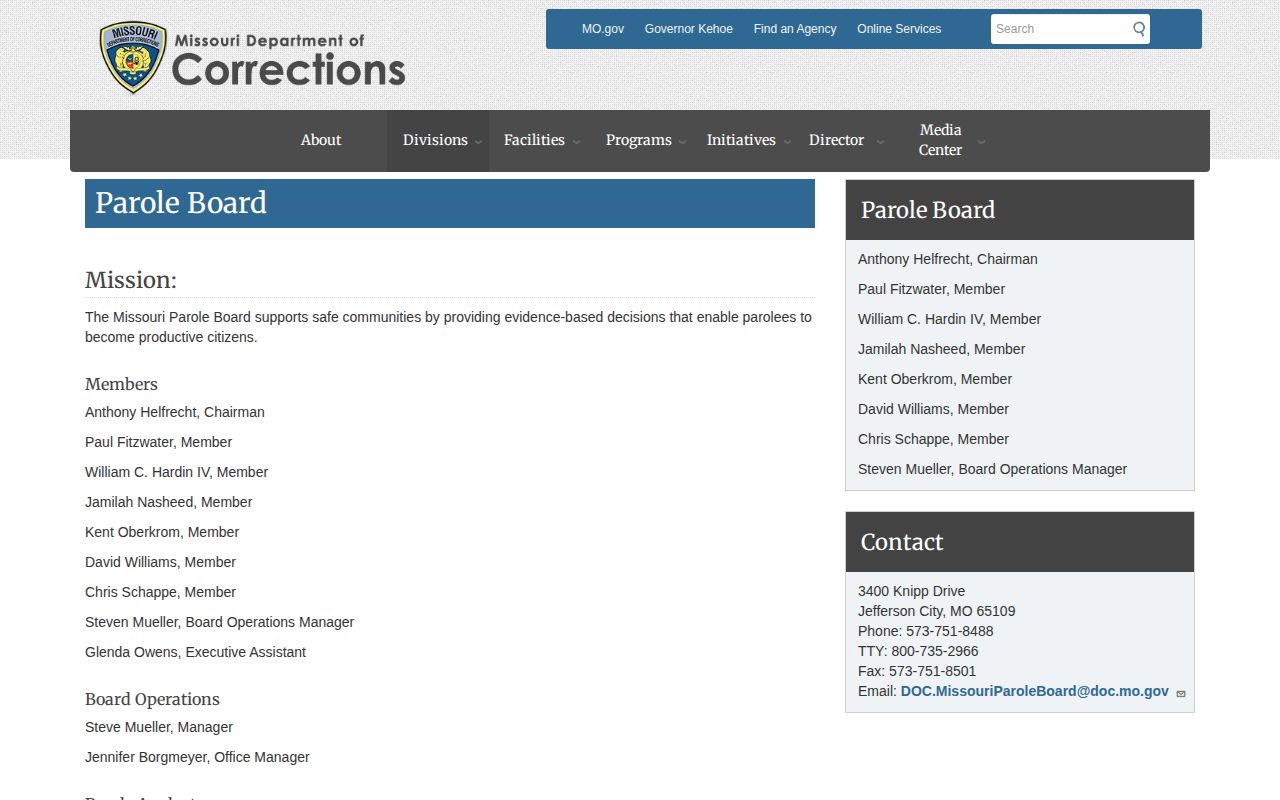
The image supports using the Board or its records custodian for the written decision rather than treating a hearing date as the day the person left prison.
Board decisions generally take about eight to twelve weeks after a hearing. A release date can still depend on an approved plan, detainers, sentence computation, and later Board action. The written decision proves the result of Board review. A physical-release record proves departure from the institution. District 5 then becomes the local source once community supervision begins.
The Board lists (573) 751-8488 and DOC.MissouriParoleBoard@doc.mo.gov for general contact. A person registered with MOVANS may receive notice when a decision is entered, but that alert is not the written decision or release record. Formal requests still go to the Board Sunshine custodian named above.
Vernon County Absconder Status Limits
No official statewide public MODOC parole-absconder or parole-warrant results list was located. Do not infer a warrant because a name has vanished from the active web search, an appointment was missed, or an address changed. District 5 is the proper source for public supervision status. An issuing court is the source for a court warrant, while the responsible law-enforcement agency controls its own warrant information.
RSMo § 217.703 defines an absconder for supervision purposes as a supervised person whose whereabouts are unknown and who left the approved residence without permission and without giving the officer current whereabouts in order to avoid supervision. That administrative status affects earned-compliance credits. It does not itself create a public warrant database or prove that a warrant exists.
Vernon County Registry Is Narrow
The Missouri Sex Offender Registry search is a separate, narrow channel. It offers name, birth date, county, address, and status fields for people subject to Missouri registration law. It is not a general parole or probation search. “Pending Registration,” “Non-Compliant,” and “Incarcerated” are registry labels, not exact release dates and not substitutes for District 5 confirmation.
The official registry search illustrates those county and identity fields:
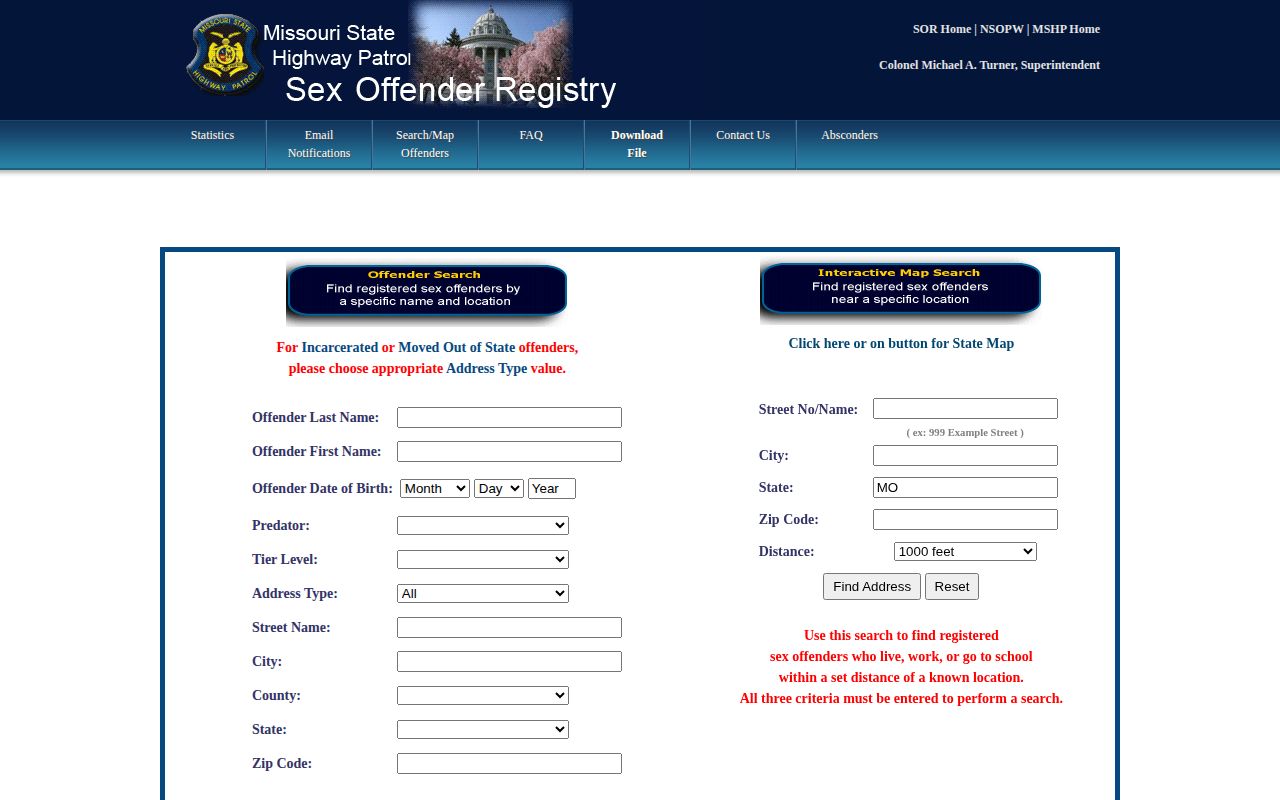
The form can corroborate a qualifying registrant’s status or intended address, but absence from it says nothing about an ordinary released detainee or supervisee.
Note: Use the registry only for a person legally subject to registration, and verify its changing address data with the registering official.
Vernon County Supervision and Discharge
Active supervision and final discharge are not the same. Under § 217.703, eligible people on probation, parole, or conditional release may earn thirty days of compliance credit for each full compliant calendar month. Statutory exclusions apply. A month with a violation report, including a qualifying absconder report, does not earn that credit. The Division recalculates remaining supervision at least twice each year.
Compliance credit reduces the community-supervision term. It does not change the historical prison-release date. Once custody time, supervision time, and eligible credits satisfy the total term, and statutory conditions are met, the Board or sentencing court orders final discharge. This distinction explains why the active MODOC search cannot answer every historical question: it includes active people and expressly excludes discharged offenders.
For a firm conclusion, preserve three dates when available: physical release from custody, the start or effective date of parole or conditional release, and final discharge from supervision. District 5 can confirm active public status. The MODOC records custodian or court supplies the durable record after the active profile is gone.